FULL ENGAGEMENT
Our posture is a good example: Have you ever passed by a department store picture window and accidentally caught your image. Often we are horrified at what we look like when no one is looking. Our posture has reverted to its "natural" form. The posture muscles become disengaged when we stop paying attention.
In dance, frequently parts of the dance or performance have that same feeling. One instance: A dancer walks casually to the back to drop her veil, then returns to the spotlight to perform. The dancer dropped her performance persona by becoming disengaged and that lessens the impact of the performance.
Being Alert = Being Engaged
Being fully engaged does not necessarily mean being full of energy, although it might. It means being fully alive and committed in our movements. The movements might be delicate or graceful, yet we fully embody them.
It turns out that full body engagement in dance is very beneficial in surprising ways:
- Joint health is improved: The muscles surrounding the joints stretch and extend, relieving tension and stress.
- Stage presence is enhanced: We are present in our body in whatever we do (including standing still).
- Movement is supported and injuries reduced: The core is active more of the time so the body is protected from misuse.
- We become more aware: The more aware we are the wiser we become. Awareness gives us personal power.
- Everything is easier when you are fully engaged. It gives us energy while being disengaged robs us of it. A disengaged body is heavy to lug around, even if it's only an arm.
- Being fully engaged takes the performance and ratchets it up several notches: Focusing on being fully engaged can result in performances which have more depth and meaning, as well as being physically formed in a way that is very satisfying for an artist.
- It is so much more fun!
Much of this article is about performance but all of the ideas apply as well to practice and to every day life. The more engaged we are, the more interesting and exciting life is and the healthier we become.
Practice being engaged all the time: when getting out of your car, getting up in the morning, going grocery shopping. Practicing adopting a performance presence all the time is wonderful for everything: your strength, your posture, your agility.
Examples of what it's like to be engaged:
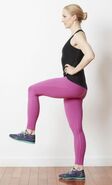
As dancers, we are often only partially engaged.
- Parts of the body are not directly involved: Belly dance is a particular culprit because of all the stationary positioning we use when highlighting isolations, for instance. The lower part of the body often gets less attention and in fact may not move at all.
- We drop our consciousness during transitions: We drop our performance personna between combinations, between pieces or when entering or exiting the stage. We should instead maintain alertness throughout from the moment we step on stage.
- We drop being engaged when we are stationary: This is a very important time to remain physically active even though you are standing still. Maintain performance posture, anticipation and excitement. It is actually interesting and potentially exciting to be fully engaged while standing still. The moment can become quite memorable, for the audience as well as you.
- We don't point` our feet: I often see dancers who may dance beautifully yet leave the hands or feet unexpressive. Pointing the feet is a particularly important finishing touch. But it is more than that. By pointing the foot you are fully expressing the movement and the energy of that expression continues and adds to the drama and impact of your performance.
Never drop your stage persona while performing.
But in life, often we strive to be as disengaged as possible. We love taking time off. We love doing nothing.
Doing nothing is particularly hard on the joints because our weight compresses them, but it also weakens the body throughout, from the legs to the core. After doing nothing for any period of time our circulation is diminished, so is our coordination and balance and it profoundly affects our feelings, leaving us with a sense of heaviness and sluggishness. Do nothing has another interesting effect: it makes us more and more stubborn, ultimately to such an extent that we may act against our own self interests.
Being fully engaged has many of the opposite effects: It increases energy. It stimulates stretching through the joints in movement, which is wonderful for the joints. The entire body is enlivened resulting in an increase in circulation. Being fully engaged is certainly a lot more fun. In essence, being fully engaged is good for your health, your body, your joints and your emotional well being. Being disengaged results in the opposite.
Because disengagement and inactivity are so ingrained in our culture, it is often necessary to remind ourselves to engage the body.
How does one actually fully engage?
- Contract/Release: Lie down on the floor in a quiet contemplative space. Relax with your arms at your side and your legs extended straight. In an organized manner, go through each major muscle group. Contract only the area as hard as you can and then fully release it.
- In dance practice, engage single ideas one at a time: For instance, practice a choreography you already know, concentrating on your facial expression throughout. Then practice it concentrating on your feet, etc. Ultimately, practice it engaging your entire body.
There are some simple reminders which help a lot:
- Pay attention to engaging your hands and your feet: If you do, everything in between will as well.
- Theory of the Lesser Limb: In every movement, one or more of the 4 limbs are not doing much. If your are in position performing isolations, your standing leg is not doing anything other than supporting you. If you make a grand gesture with one leg and the opposite arm, the arm "left behind" is not expressing much. In whatever you do, think of engaging the lesser limb, even if it is still. If you enliven there, it transforms your entire expression. And often, in turn, leads to new and interesting territory.
Frequently the solution to our problems is simply to engage the core.
Which fitness modalities teach engagement?
- Ballet: In this form, the body is very carefully properly aligned in every movement with the facial expression included. Stage presence is meticulously maintained throughout.
- Jazz, Modern Dance: Both these styles are more forgiving than ballet yet generally, stage persona is maintained all the time.
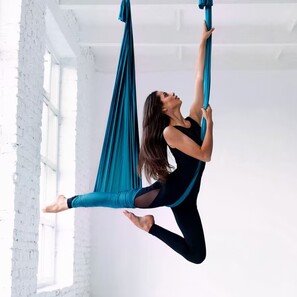
- Aerial Yoga: This fitness mode requires full contraction in many poses yet it also can provide complete release as well.
- Yoga: Even though many poses are designed for relaxation, the body is still fully engaged executing them. For example, the hands and fingers should be actively pressing into the floor as they support the body's weight in Downward Dog.
- Belly Dance: Transitions are not generally supported. The dance style favors movements of the torso and hips. The feet and legs are often ignored. Concepts of full engagement could have a dramatic impact on belly dance performance for many practitioners.
- Tap Dance: This is a very relaxed dance form. Often the only thing, or certainly the major thing considered are the feet and rhythm. It is an extremely valuable style of dance for those older because of its health benefits. Full body engagement, however, does not really enter the picture.
- Contact Improvisation: This dance style is centered on experiencing the moment in movement with touch being the primary sense focused upon. In general, disengagement is the movement mode with deliberate hand and foot expression in particular often missing.
Some examples: